

Every designer intuitively knows that better user experience leads to better business outcomes. The problem is that intuition does not survive a budget meeting. When you are sitting across from a CFO who wants to know why the company should invest R500,000 in a UX redesign instead of three additional backend developers, you need numbers. Real numbers, tied to real business metrics, presented in language that decision-makers understand.
This is the gap that kills UX investment in most organisations. Not a lack of good design — a lack of good arguments.
The Forrester Study: R1 In, R100 Out
The most widely cited UX ROI figure comes from Forrester Research: every dollar invested in UX returns between $2 and $100, with a median return of approximately $100 for every $1 spent. In South African terms, that is every R1 invested generating R100 in return. The figure is striking, but it is also misleading if you quote it without context.
Map UX improvements to specific business metrics -- executives need to see where R100 returns will appear.

Forrester's calculation includes productivity gains from reduced training time, reduced development costs from fewer post-launch change requests, lower support costs from reduced call volumes, and increased revenue from improved conversion rates. The R100 figure is a composite across all of these channels over the product lifecycle, not a single metric you can point to in a quarterly report.
This matters because when you present this number to executives, the immediate question will be: "Where specifically will we see that return?" If you cannot answer that question with specifics relevant to your organisation, the number loses credibility. The real work of UX ROI is not citing Forrester — it is mapping UX improvements to your specific business metrics.
Conversion Rate Improvements
For any organisation with a digital sales or signup funnel, conversion rate is the most direct UX metric that translates to revenue. The arithmetic is straightforward: if your e-commerce site converts at 2% and a UX improvement moves that to 2.5%, you have increased revenue by 25% with no increase in marketing spend or traffic.
The improvements that move conversion rates are often surprisingly small in scope. Reducing form fields from 10 to 6 can increase completion rates by 30-40%. Making the primary call-to-action button more visually prominent — through contrast, size, or positioning — routinely delivers 10-20% improvements. Simplifying a checkout flow from five steps to three can cut cart abandonment by half.
The key is measuring before and after. Every UX change to a conversion-critical flow should be treated as a hypothesis with a measurable outcome. Set up the analytics tracking before you begin the redesign, establish a baseline, implement the change, and measure the impact over a statistically significant period. This gives you a concrete number — "This UX change increased monthly revenue by R120,000" — that speaks directly to the business.
Every R1 invested in UX returns roughly R100 in business value through conversions and retention.
Support Ticket Reduction
Support costs are a hidden tax on bad UX. Every time a user cannot figure out how to complete a task, cannot find information, or encounters a confusing error message, they either abandon the product or contact support. Both outcomes cost money.
The cost of a single support ticket varies by organisation, but industry benchmarks put it between R150 and R400 for a phone interaction, and R50 to R150 for an email or chat interaction. If your application generates 500 avoidable support tickets per month — tickets that are caused by UX confusion rather than actual bugs or account issues — that is R75,000 to R200,000 per month in direct support costs. Reducing those tickets by 40% through UX improvements delivers measurable, recurring savings.
At Pepla, we routinely analyse support ticket data as part of our UX audit process. We categorise tickets by root cause, identify the ones driven by usability issues, and prioritise UX improvements based on which changes will eliminate the most expensive ticket categories. This gives our clients a clear ROI projection before the design work begins.
User Retention and Lifetime Value
Acquiring a new user is five to twenty-five times more expensive than retaining an existing one. UX directly affects retention: a frustrating experience drives users away, while a smooth, efficient experience builds habit and loyalty.
The metrics here are churn rate and customer lifetime value (CLV). If improving your onboarding experience reduces 30-day churn from 40% to 25%, you have retained 37.5% more users — each of whom will generate revenue over their lifetime with your product. For a SaaS product charging R500/month with a 12-month average lifetime, each retained user represents R6,000 in lifetime value.
Retention improvements compound over time. A 5% improvement in monthly retention, sustained over a year, can double the number of active users compared to the baseline — without changing acquisition spend at all. This is the argument that resonates most strongly with growth-stage businesses.
A/B test every UX change to prove ROI with data, not opinions.
A/B Testing UX Changes
The gold standard for measuring UX ROI is the controlled experiment. A/B testing allows you to isolate the impact of a specific UX change by showing the old version to half your users and the new version to the other half, then comparing outcomes.
Effective A/B testing of UX changes requires discipline. Test one variable at a time. Run the test long enough to reach statistical significance — typically two to four weeks for most traffic volumes. Define your success metric before you start the test, not after you see the results. And be honest about inconclusive results: not every UX change produces a measurable improvement, and that is useful information too.
Tools like Google Optimize (or its successors), LaunchDarkly, or even simple feature flags in your application code make A/B testing accessible to any team. The barrier is not technical — it is cultural. You need to commit to measuring outcomes rather than relying on design instinct alone.
Presenting UX ROI to the C-Suite
Executives do not care about wireframes, user journeys, or heuristic evaluations. They care about revenue, cost, risk, and competitive advantage. When you present UX ROI, translate everything into these terms:
- Revenue impact: "Improving checkout UX is projected to increase conversion by 0.5 percentage points, generating an additional R1.2M in annual revenue based on current traffic."
- Cost reduction: "Redesigning the account settings flow will reduce related support tickets by an estimated 200 per month, saving R80,000 monthly in support costs."
- Risk mitigation: "Our current onboarding flow has a 60% drop-off rate. We are losing 6 out of 10 users before they experience the product's value. This redesign targets reducing that to 35%."
- Competitive advantage: "User reviews consistently cite our competitor's simpler interface as a reason for switching. Closing this UX gap is a retention imperative."
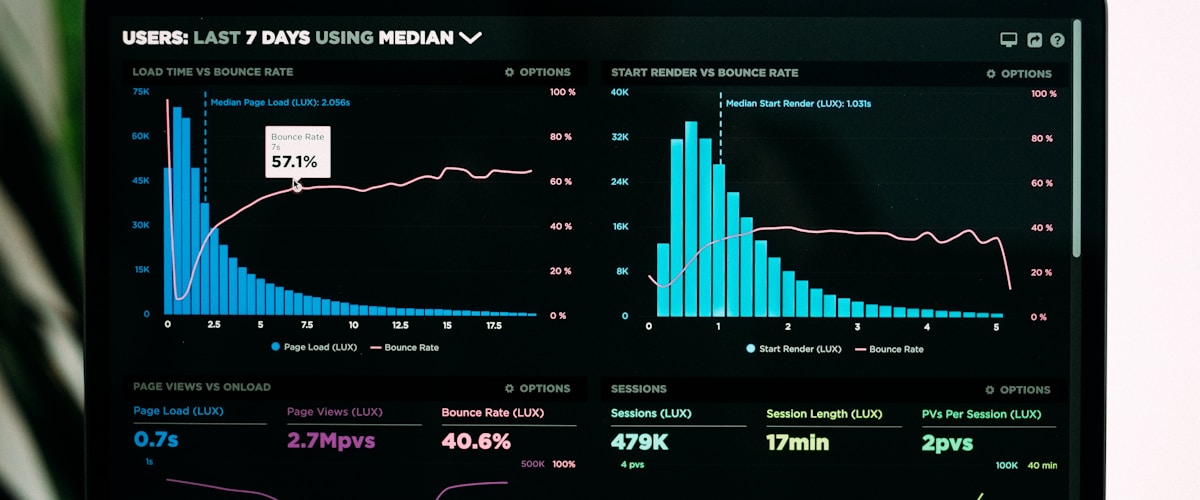
Use dashboards, not slide decks. Show the metrics before and after. Make UX ROI visible on the same reporting infrastructure where the business tracks all its other KPIs. When UX metrics live alongside revenue and cost metrics, they stop being a design concern and become a business concern.
Good UX is not expensive -- bad UX is. The cost is hidden in support tickets, lost conversions, and rework.
Pepla's Approach to UX ROI
At Pepla, we do not start a UX engagement with wireframes. We start with metrics. What does the business measure? Where are the biggest gaps between current performance and targets? Which user flows have the highest impact on revenue or cost?
We then map specific UX improvements to those metrics, set measurable targets, and track outcomes after implementation. This turns UX from a subjective design exercise into an accountable business investment. Our clients know exactly what they are getting for their UX spend — not in abstract quality improvements, but in Rands.
Good UX is not expensive. Bad UX is expensive. The cost is just hidden in support tickets, lost conversions, churned users, and development rework. Making those costs visible is the first step to making the case for investment.
Pepla's UX team has helped clients achieve measurable improvements in conversion rates, task completion, and user satisfaction scores. We do not just design -- we measure the impact.
The organisations that invest consistently in UX outperform those that do not. But "invest consistently" requires a business case that renews itself with each budget cycle. Build that case on numbers, not intuition, and UX will never be the first line item cut.