
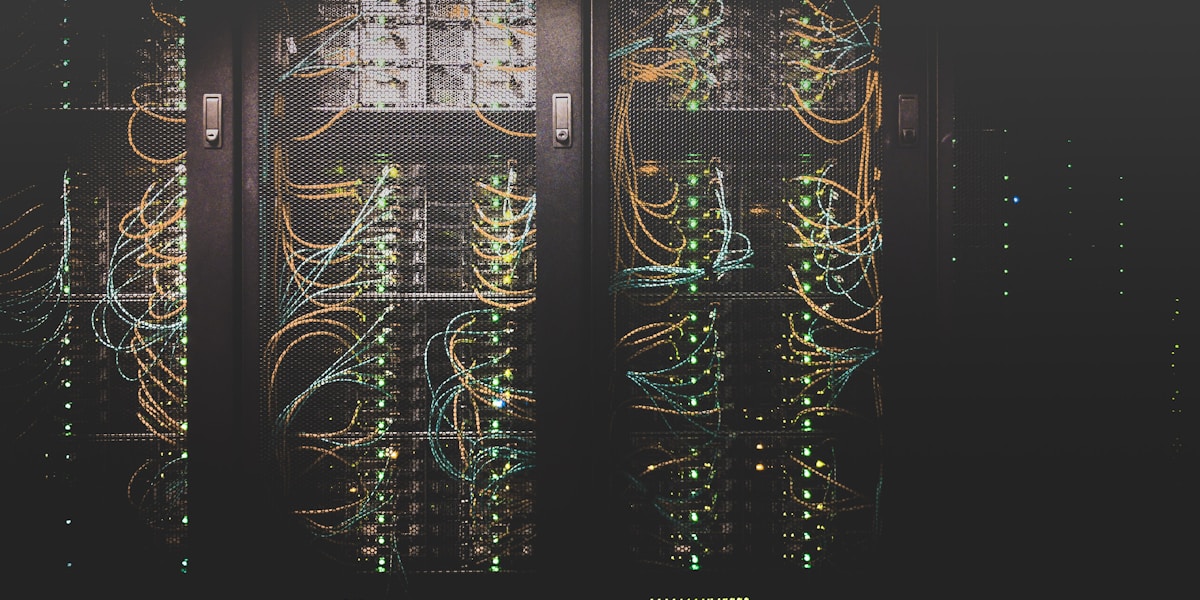
DevOps is a culture, not a job title -- or so the purists say. They are not wrong in principle, but in practice, someone needs to build the pipelines, manage the infrastructure, configure the monitoring, and respond when the pager goes off at 2 AM. That someone is the DevOps engineer. It is a role that sits at the intersection of software development and IT operations, and its scope has expanded dramatically as cloud-native architectures, containerisation, and infrastructure as code have become standard practice. At Pepla, our DevOps engineers -- available through team augmentation -- enable every development team to ship faster and more reliably.
Infrastructure as Code

The foundational practice of modern DevOps is Infrastructure as Code (IaC) -- defining infrastructure through machine-readable configuration files rather than manual processes. Instead of logging into a cloud console and clicking through menus to provision a server, a DevOps engineer writes a configuration file that describes the desired state, and a tool provisions it automatically.
Terraform is the most widely adopted IaC tool for provisioning cloud resources. It uses a declarative language (HCL) where you describe what you want -- a virtual network with three subnets, a managed database with read replicas, a load balancer with SSL termination -- and Terraform figures out how to create it. Critically, Terraform maintains a state file that tracks what exists, enabling it to calculate the minimal set of changes needed to reach the desired state. This makes infrastructure changes predictable and reviewable through the same pull request process used for application code.
Ansible operates at a different level. Where Terraform provisions infrastructure (creating servers, databases, and networking), Ansible configures it (installing software, managing configuration files, deploying applications). Ansible uses an agentless architecture -- it connects to target machines via SSH and executes tasks defined in YAML playbooks. This makes it lightweight to adopt and eliminates the overhead of managing agent software on every server.
The combination of Terraform for provisioning and Ansible for configuration gives DevOps engineers a complete, version-controlled, repeatable infrastructure stack. At Pepla, every client environment is defined in code. This means we can rebuild any environment from scratch in minutes, maintain consistent configuration across development, staging, and production, and audit every infrastructure change through version control history.
Containerisation
Docker solved the "it works on my machine" problem by packaging applications with their dependencies into portable containers. A Docker container includes the application code, runtime, system libraries, and configuration -- everything needed to run the application regardless of the host environment. If it runs in a Docker container on a developer's laptop, it runs identically in staging and production.
The DevOps engineer's role with Docker goes beyond writing Dockerfiles. They establish container image standards (base images, security scanning, size optimisation), manage container registries (where images are stored and versioned), and design multi-stage build processes that produce lean, secure production images.
Kubernetes (K8s) takes containerisation to production scale. It orchestrates containers across clusters of machines, handling scheduling (which container runs where), scaling (spinning up more instances when demand increases), self-healing (restarting failed containers automatically), and service discovery (how containers find and communicate with each other).
Docker solved "it works on my machine." Kubernetes orchestrates containers at scale. The DevOps engineer decides when each tool is worth the complexity.
Kubernetes is powerful and complex. The DevOps engineer manages cluster configuration, defines deployment strategies (rolling updates, blue-green deployments), configures resource limits and auto-scaling policies, manages secrets and configuration, and maintains the networking layer (ingress controllers, service meshes). They also make the critical decision of when Kubernetes is appropriate -- for small applications with predictable load, the operational overhead of Kubernetes may outweigh its benefits. At Pepla, we evaluate container orchestration needs on a project-by-project basis rather than applying Kubernetes by default.
Infrastructure as Code means every environment is reproducible, auditable, and version-controlled -- no more "works on my machine" surprises.
CI/CD Pipeline Design

Continuous Integration and Continuous Delivery pipelines are the assembly lines of modern software. A well-designed CI/CD pipeline takes every code change through a sequence of automated steps: build, test, analyse, package, and deploy -- with human approval gates where appropriate.
The DevOps engineer designs and maintains these pipelines. A typical CI pipeline includes compiling or building the application, running unit tests, performing static code analysis (linting, complexity checks), scanning dependencies for known vulnerabilities, building container images, and pushing them to a registry. A typical CD pipeline extends this to deploy to staging environments, run integration and end-to-end tests, await manual approval for production, execute the production deployment, and run smoke tests to verify the deployment succeeded.
Pipeline design involves trade-offs. More stages mean more confidence but longer feedback loops. Parallel execution speeds things up but increases infrastructure cost. The DevOps engineer balances these factors to create pipelines that are fast enough for developers to use regularly (under 15 minutes for the CI portion is a common target) while thorough enough to catch issues before they reach production.
A pipeline that takes 45 minutes to run will be avoided. A pipeline that takes 8 minutes becomes part of the development rhythm. Pipeline speed is a feature, not a luxury.
At Pepla, we use Azure DevOps, GitHub Actions, and GitLab CI depending on the client's ecosystem. The specific tool matters less than the design principles: fast feedback, reliable execution, clear failure messages, and easy recovery from failures.
Monitoring and Alerting
Deploying software is only half the story. The other half is knowing whether it is working correctly once deployed. Monitoring and alerting are the DevOps engineer's eyes and ears in production.
Prometheus is the de facto standard for metrics collection in cloud-native environments. It scrapes metrics from applications and infrastructure at regular intervals and stores them as time-series data. Applications expose metrics through endpoints -- request counts, error rates, response latencies, memory usage, queue depths -- and Prometheus collects them. Alert rules defined in Prometheus evaluate these metrics continuously and fire alerts when thresholds are breached.
Grafana provides the visualisation layer. It connects to Prometheus (and dozens of other data sources) and presents metrics through customisable dashboards. A well-designed Grafana dashboard gives the team an at-a-glance view of system health: request rates, error rates, latency percentiles, resource utilisation, and business metrics. The DevOps engineer designs dashboards that surface the right information at the right level of detail for different audiences -- a high-level overview for stakeholders, detailed technical dashboards for the development team.
The ELK stack (Elasticsearch, Logstash, Kibana) handles log aggregation. In distributed systems where logs are spread across dozens of containers and services, centralised logging is essential. Logstash (or its lightweight alternative, Filebeat) collects logs from all sources and sends them to Elasticsearch for indexing. Kibana provides search and visualisation, enabling the team to trace requests across services, investigate errors, and identify patterns.
The DevOps engineer configures all of this, but more importantly, they define the alerting strategy. Alert fatigue -- too many alerts, too often, for non-critical issues -- is a serious problem. Every alert should be actionable. If an alert fires and the correct response is "ignore it," the alert should not exist. At Pepla, we follow the principle that every alert should require human intervention and should include a link to a runbook describing the expected response.
A pipeline that takes 45 minutes will be avoided. A pipeline under 15 minutes becomes part of the development rhythm. Speed is a feature.
Security Scanning
Security has shifted left in the development lifecycle, and the DevOps engineer is responsible for embedding security checks into the delivery pipeline. This practice, often called DevSecOps, makes security a continuous process rather than a pre-release gate.
Pipeline-integrated security includes dependency scanning (tools like Snyk or Dependabot that check third-party libraries for known vulnerabilities), container image scanning (tools like Trivy that analyse Docker images for vulnerable packages), static application security testing (SAST) that analyses source code for security anti-patterns, and dynamic application security testing (DAST) that probes running applications for vulnerabilities like SQL injection and cross-site scripting.
The DevOps engineer configures these tools, tunes their sensitivity to reduce false positives, defines policies for vulnerability severity (which vulnerabilities block deployment, which generate warnings), and ensures findings reach the right people promptly.
The SRE Overlap
Site Reliability Engineering, pioneered by Google, shares significant territory with DevOps engineering. Both roles care about system reliability, automation, and operational efficiency. The distinction is largely one of emphasis.
DevOps engineering emphasises the delivery pipeline -- getting software from code to production efficiently and reliably. SRE emphasises production reliability -- keeping systems running, managing incidents, and defining reliability targets through Service Level Objectives (SLOs), Service Level Indicators (SLIs), and error budgets.
In practice, many organisations combine these roles. A DevOps engineer at Pepla might build the CI/CD pipeline, manage the Kubernetes cluster, configure Prometheus alerting, and participate in the on-call rotation for the systems they manage. The SRE mindset -- defining and measuring reliability, making data-driven decisions about where to invest in robustness -- informs how they approach all of these responsibilities.
On-Call Responsibilities
Production systems do not confine their problems to business hours. On-call responsibility -- being available to respond to critical issues outside normal working hours -- is a fundamental aspect of the DevOps role.
Effective on-call practice requires several things. Clear escalation policies define who is called first, what the response time expectations are, and when to escalate to the next level. Runbooks provide documented procedures for known failure scenarios, enabling the on-call engineer to respond effectively even when they are not fully awake at 3 AM. Post-incident reviews (or "blameless postmortems") analyse what went wrong after every significant incident, producing action items that prevent recurrence.
On-call rotation should be shared fairly across the team and compensated appropriately. A team where the same person is always on call burns out quickly. At Pepla, we structure on-call rotations with primary and secondary responders, ensure handoffs include a summary of recent changes and known issues, and track on-call burden as a team health metric.
Every alert should be actionable. If the correct response is "ignore it," the alert should not exist. Alert fatigue is a serious operational risk.
Pepla's DevOps engineers can embed into your team to build CI/CD pipelines, containerise applications, and set up monitoring -- drawing on our own hosting infrastructure experience.
The best DevOps engineers treat every on-call incident as a signal. If the same alert fires repeatedly, the underlying cause needs to be fixed. If an incident requires heroic manual intervention, the response should be automated. The goal is not to be good at fighting fires. It is to prevent fires from starting.